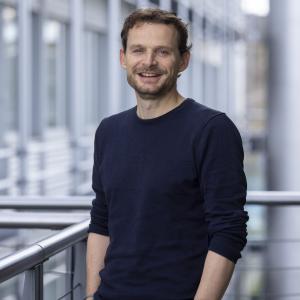
Prof. Lucas Pelkmans
Area of Research
Description of Research Interest
Our research focuses on understanding how cells make decisions in complex biological systems, and how variability between individual cells gives rise to robust tissue-level behaviors in development and disease. We combine high-throughput, multiplexed imaging (notably iterative indirect immunofluorescence, 4i) with quantitative image analysis and machine learning to measure hundreds of molecular features per cell while preserving spatial context. A central aim is to uncover non-genetic sources of cellular heterogeneity, including signaling dynamics, subcellular organization, and biomolecular phase separation, and to determine how these drive fate decisions, stress responses, and pathological states such as cancer. Increasingly, we are interested in causal emergence across spatial and organizational scales—linking molecular states, cellular phenotypes, and tissue architecture—and in generating uniquely information-rich datasets to train the next generation of AI models for biology. We actively seek collaborations with experimentalists and theorists in systems biology, developmental biology, cancer biology, imaging, and data science to jointly develop new technologies and mechanistic insights.
Special Expertise
- High-throughput single-cell and spatial imaging, including development and large-scale application of iterative indirect immunofluorescence (4i)
- Quantitative bioimage analysis and feature extraction across subcellular, cellular, and tissue scales
- Machine learning and AI for image-based systems biology, including representation learning from multiplexed imaging data
- Analysis and modeling of cellular heterogeneity and non-genetic variability
- Systems-level analysis of signaling networks and cellular state transitions
- Biomolecular condensates and phase separation, including regulation by kinases (e.g. DYRK3)
- Causal modeling of cellular decision-making and multiscale biological organization
- Experimental and computational integration of imaging with perturbations (genetic and chemical perturbations)
- Application of spatial and single-cell approaches to development, cancer, and cell biology
- Design of information-rich datasets for training next-generation AI models in biology
Shareable Platforms, Services, Equipment & Infrastructure
- High-throughput 4i multiplexed imaging platforms (hundreds of markers, single-cell & spatial resolution)
- Liquid handling robotics and automation for complex staining and perturbation workflows
- Multi-well plate–based screening infrastructure (arrayed and optical pooled screens)
- Integrated perturbation–imaging pipelines (chemical, environmental, genetic/targeted perturbations)
- Advanced high-content microscopy across subcellular to tissue scales
- Scalable computational infrastructure for large-scale image processing, storage, and analysis
- In-house bioimage analysis and machine-learning pipelines
- Support for collaborative dataset generation, method transfer, and co-development
Member of Collaborative/interdisciplinary Research Consortia
- TumorProfilerCenter – Integrated multi-omics and imaging approaches for precision oncology and clinical decision support
- NCCR KidsCan – National research network focused on mechanisms, diagnosis, and treatment of pediatric cancers
- BioVisionCenter – Computational imaging, AI, and machine-learning methods for biological vision, including vision transformer–based models